The method
How the books work
You learn a language by reading a lot of it. Each book gives you real texts you can mostly follow, with the harder words explained right on the page, so you rarely need a dictionary.
The notes in the margin
Any word a reader fresh from a first course might not know is explained beside its line, in the language of the book. A compound word is broken into its parts. A rare word is paired with a more common one that means the same. Often a word is also shown in a short sentence from Scripture or another classic text, with the reference.
Every note comes from the word itself or from a public-domain text, never from guesswork.
A text you can trust
Each book is newly read from a public-domain printing, checked against an independent transcription, and corrected at the page. In the Latin readers every long vowel is marked, as in the best modern courses.
Who the books are for
The books are for readers who have finished a first course and want to keep reading real Latin or Greek. They suit homeschool families and classrooms, and any Christian who wants to read the Church's own texts with ease.
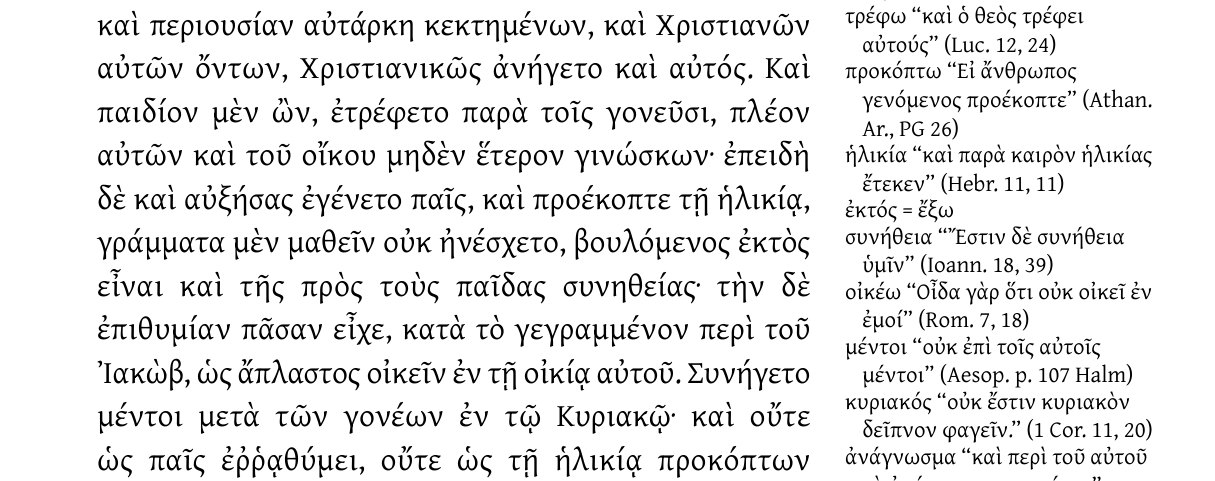
The Greek readers work the same way: The Life of Saint Antony, with its notes in Greek.
The mailing list
New volumes, and free sample pages
We'll send you a short email when a new volume comes out.